(Re)discovering Afro-Brazilian Literature Through BBP Data Entry
Maria Smith | Rutgers University | March 2025
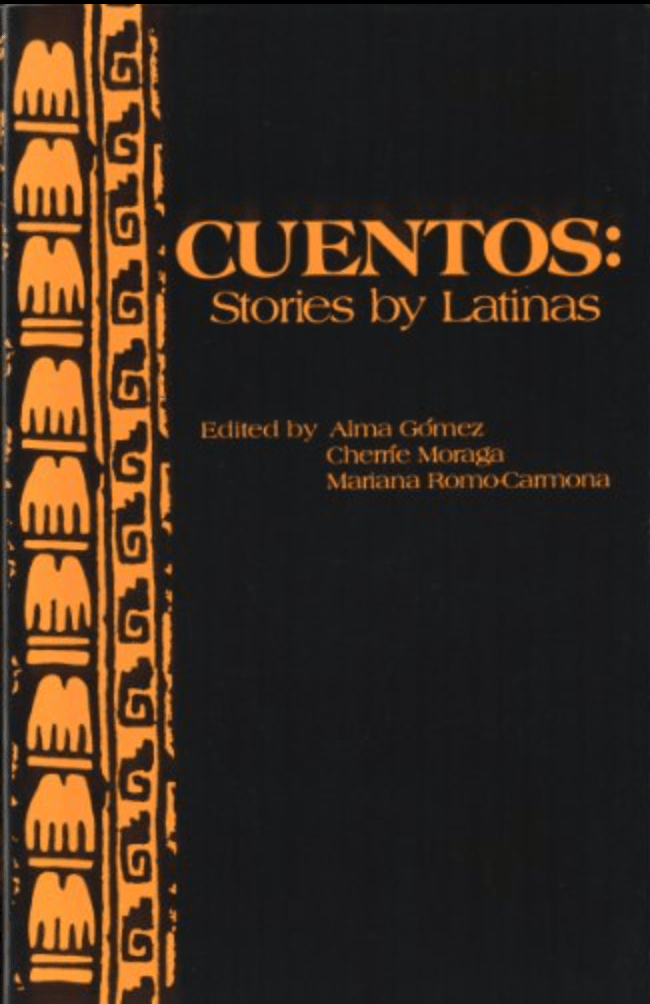
As I continue my data entry for the Black Bibliography Project, I have zeroed in on works published by Black independent presses of the 20th century. I am a student of contemporary Spanish literature, interested in studying literature by Afro-Spanish writers on the Iberian Peninsula. So, I don’t often find works or authors that overlap with my specific research interests. However, while working on the corpus for Kitchen Table: Women of Color Press, I came across Cuentos: Stories by Latinas, a collection of short stories by various Latina authors in English, Spanish, and Spanglish. This collection included an excerpt by Carolina María de Jesus, an Afro-Brazilian writer best known for her published diary, Child of the Dark (1960).
In undergrad, I developed a keen interest in Afro-Brazilian literature, after taking a first-year seminar, “Race in Brazil.” Later, I learned about Jesus’s work in a different class on Brazilian social and cultural issues where we read Child of the Dark. However, there wasn’t much interest from students and there was only one professor who specialized in Brazilian literature, so, I was unable to take more than one class about Brazil and their exceptional writers.
Jesus’s work struck me back then, as she was outspoken about social issues in Brazilian life, such as racism, sexism, marriage, and sexuality in the mid-twentieth century.
She spoke fondly of her dark skin and “kinky” hair and displayed Black pride that was rare in Brazilian literature in the mid-20th century.I remember writing my final paper for this class, reflecting on her sentiments and how they resonated with themes of Black female empowerment that we see in the 1960’s and onward in the United States. This also speaks to the parallelism one can find between U.S. Black power and Afro-Brazilian liberation movements.

Surprised, I quickly paged through to the excerpt, curious whether this was from her most famous work or a “new” work that was not on my radar. The excerpt was from “Batita’s Journal”, an unfinished novel by Jesus. Her writing parallels her published diary and explores similar themes as her published work as race, gender, class, and Black existentialism.My initial surprised stemmed from the inclusion of an Afro-Brazilian writer, in a book called Cuentos by “Latinas,” a term that can sometimes be used interchangeably with “Hispanic” despite referring to a different region of people. I was glad to see that Kitchen Table Press had honored this inclusive word, instead of just sticking to writers of Hispanic origin. I also was pleased to see more of Jesus’s work circulating.
While doing data entry that day, my surprise turned to excitement as I realized I could create Carolina María de Jesus as an agent in the database and link her to her respective work. I researched her on Wikidata and Library of Congress, linked her to “Childhood,” and linked that work to the aggregated work of Cuentos that I had been recording. When I found Jesus’s work in the anthology, I thought about her impact as an Afro-Brazilian woman and her reach beyond the Spanish and Portuguese-speaking world. Djamila Ribeiro, Afro-Brazilian Black feminist philosopher and journalist recently spoke at Rutgers and mentioned how U.S. Black power movements and Afro-Brazilian liberation movements can learn from each other.
The work that the BBP does perhaps can highlight these parallelisms or lead a researcher to a serendipitous find that may expand or benefit an ongoing research project.
Now, I can rest easy knowing that Carolina María de Jesus is recorded and officially in the Black Bibliography Project’s database, expanding slowly but surely to include writers of different linguistic backgrounds.

This license enables reusers to copy and distribute the material in any medium or format in unadapted form only, for noncommercial purposes only, and only so long as attribution is given to the creator.
 The Black Bibliograpy Project